
Availability, Not Affordability, Will Become Biggest Worry as Trump’s Misguided War Threatens Global Crash, Further Harming Americans’ Economic Well-Being
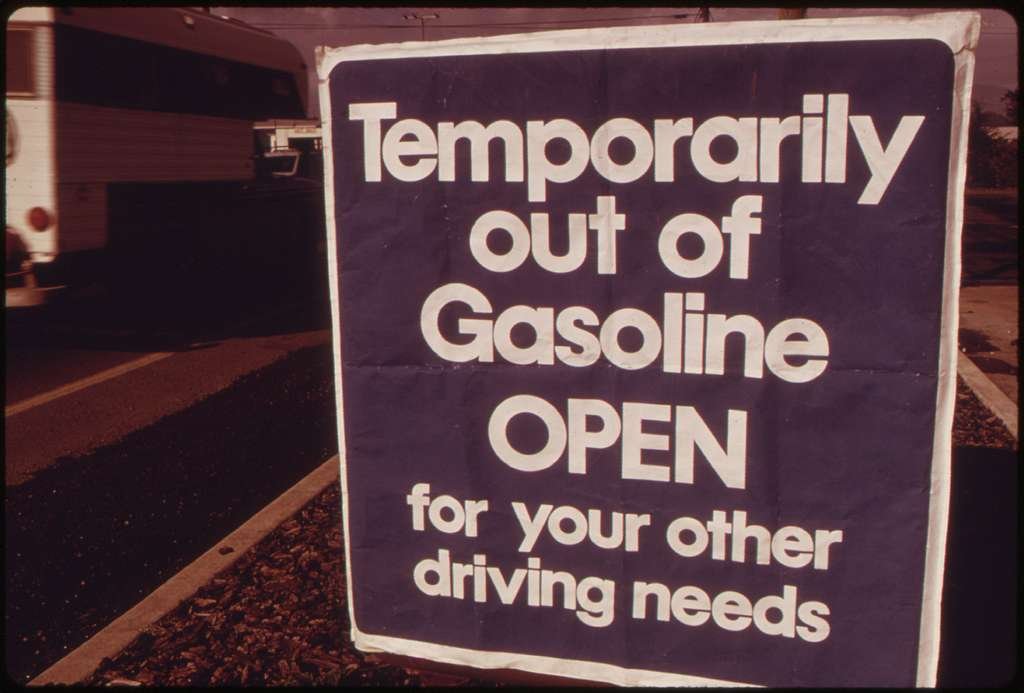
“Availability,” not “affordability,” really needs to be the word of the day to truly capture the grave dangers looming on the economic horizon for Americans and, in fact, for all peoples around the globe.
Don’t get me wrong. Affordability is still a huge issue, with the producer price index soaring 6% this April compared to last year. Inflation is surging, and Americans are struggling. No amount of lying can obscure this basic reality most Americans are experiencing.
But it’s one thing to pay high prices for what we need. It’s another to not have access at all to resources and basic necessities we need to live on a day to day basis. This is why “availability” is a more appropriate and accurate word to represent the reality of the national and global economic situation and the grave dangers approaching us in the near future, probably sooner than later.
To understand fully the devastating path down which Donald Trump’s arrogant leadership and ill-conceived war are taking America and the entire globe, it’s precisely this issue of the availability of resources necessary to meet basic human needs that we need to be tracking and understanding.
As an example, let’s take the issue of jet fuel. Experts and analysts have sounded the alarm that the supply issues are serious and that shortages are not just imminent but will have long-term consequences.
John Gradek, who teaches aviation risk management at McGill University, has warned, “We’re going into crisis mode,” elaborating that “the industry has never seen this before, where the actual supply of the product needed to support aviation, that pipeline, is drying up.”
Matt Smith, director of commodity research at the energy data and analytics platform Kpler, says that the jet fuel shortage is “slow-motion car crash,” insisting, “It’s not going to be a short-term issue, because it can’t be easily solved.”
These views are not outliers but rather mainstream. Goldman Sachs, for example, has informed investors that Europe’s jet fuel supply is expected in June to dip below what the International Energy Agency identifies as a critical 23-day shortage threshold. In April, this agency calculated that Europe had “maybe six weeks of jet fuel left” and that countries in Asia, Africa, and Latin America would feel the impact sooner.
These conditions are expected to significantly reduce air traffic in 2026. Keep in mind that air traffic isn’t just about people going on discretionary vacations for a good time; it’s also how we transport goods. Reducing air traffic threatens the availability of basic resources around the globe.
We already know that the closing of the Strait of Hormuz is making it difficult for American farmers not just to afford but even to access the fertilizer necessary for them to grow their crops.
Again, it’s challenging enough to afford elevated food prices; it’s a far more dire situation to face actual food supply shortages.
And gasoline shortages can negatively impact the availability of food and other goods as well. California, for example, according to some sources, has roughly six weeks of gas supply left. The prospect of rationing is real. Again, the availability of food in the U.S. depends greatly on the ability to transport that food around the country.
To truly assess the damaging and too-often deadly impact of Trump’s economic and foreign policies–and his leadership overall–we need to shift the conversation, or at least layer the conversation, to consider not just the issue of affordability but the dire issue of availability, of the supply of the basic necessities we all need to live.
Trump has told us clearly he doesn’t care about Americans’ financial situation. It seems clear he’s not thinking about Americans’ lives either.
Hopefully, Americans will vote to save their lives.