
Culture and Politics

Take a minute to write an introduction that is short, sweet, and to the point.
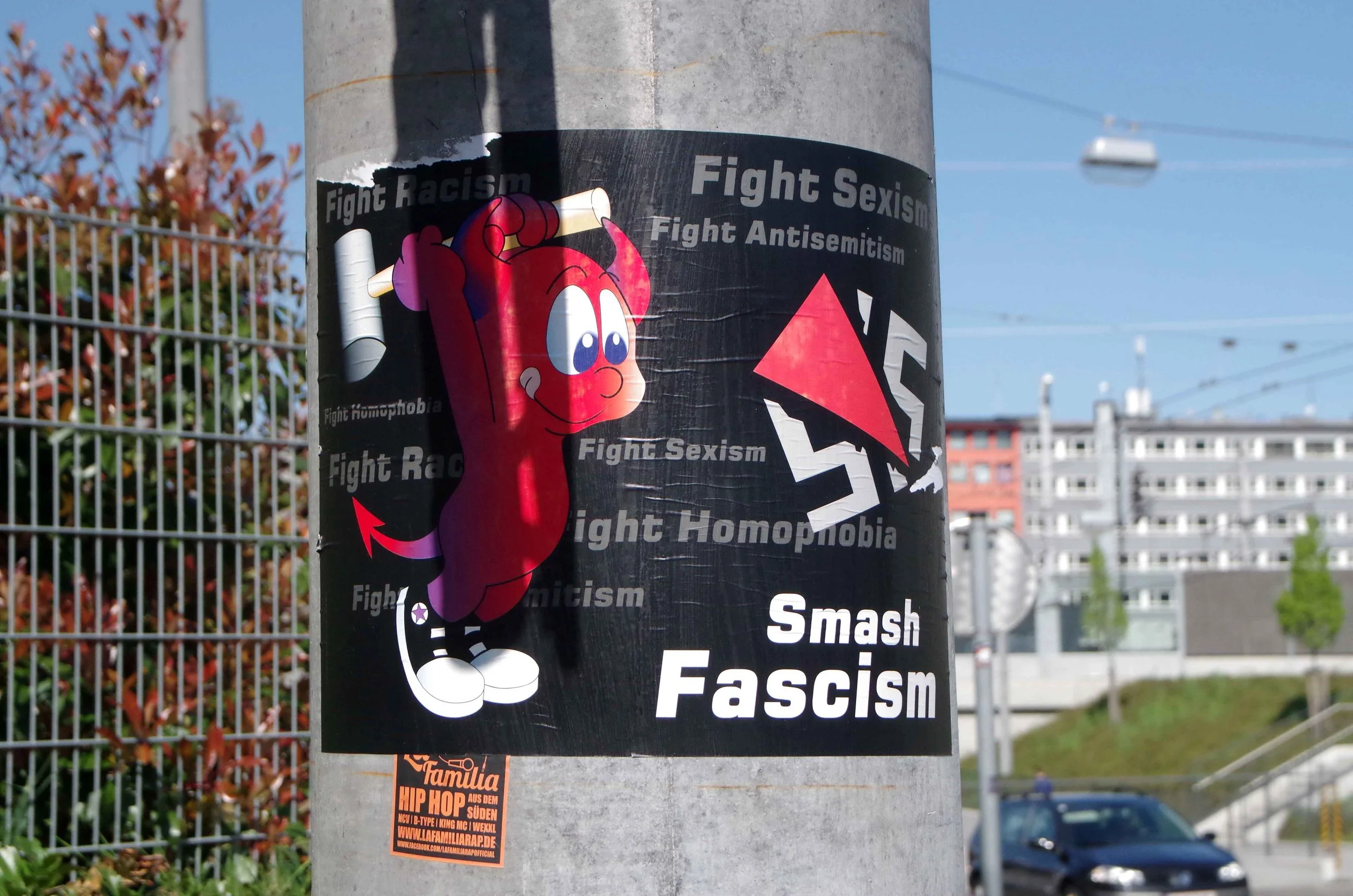
Will the “Left” Support and Participate in a United Front Against MAGA Fascism for the Mid-Term Elections?
Will the left in its various iterations lend its energy to the effort of the working class and people’s movement to elect a Democratic Party majority to the Senate and House? And, if successful, will the left join the working class and people’s movement after the elections to restrain the autocratic, imperial president on the one hand and on the other hand, to press for a people’s legislative agenda, but now with the Democrats in control of Congress?

The Hope and Challenge of the WNBA and Women’s Pro Basketball Players for Civil Rights and Democracy in America
So, without question the WNBA and Unrivaled have been and can continue to be important cultural institutions for advancing civil and human rights to foster democracy and egalitarianism in America. The commitment to these values and practices, though, will have to be ever-renewed and vigilantly guarded.
Who Deserves Rape? State-Sanctioned Sexual Violence and Second-Class Citizenship for LGBTQ Americans Undermine Basic Humanity and Equality
Americans need to own what they are sanctioning and have historically sanctioned and not have the luxury of denying the reality of the moral monstrousness of our national behavior.
Put most simply, in a nation that has long sought to distinguish itself by its aspirational values of equality and liberty, we find ourselves as a nation engaging in a behavior of determining which Americans deserve to face discrimination and violence.
Against which Americans can we discriminate in this nation? Upon which Americans can we inflict violence with impunity? Who can get raped without consequence for the rapist?
When It Comes to Gender, Marjorie Taylor Greene Is Wrong on the Science and the Poetry
Of course, true scientific practice would record and recognize all the forms of life we see occurring in nature, not deny or dismiss them. It is culturally prejudicial norms that term intersex children as aberrant or abnormal. It is here we need poetry to de-familiarize and bring us beyond imprisoning linguistic and cultural norms, which is precisely its function.

Review: “A Little Prayer” Brings a Heavy Dose of Empathy to This Raucous Political Moment
This is both a rare opportunity and a rare film. It is, as the reviewer in Variety says, “…sensitive, modest, a story so small it could be contained in a teardrop…” Surprisingly, at this time in our raucous political culture, it holds itself apart by its remarkable thoughtfulness and empathy.

Review: Coppola’s “Megalopolis” imagines feminist democracy as salvation for the American Republic
In a virtual interview following the showing of “Megalopolis,” Francis Ford Coppola spoke with the audience about what he had hoped to address with his film. “Like Ancient Rome, we are in danger of losing our Republic. How do we get out of this?” he asked. “We have to [somehow] leap over patriarchy,” was his suggestion, “because patriarchy is going nowhere.” He cited the work of Riane Eisler, “The Chalice and The Blade,” in which she looks at the work of Marija Gimbutas, a cultural and linguistic anthropologist who examined ancient Indo-European societies and found that a large percentage were matriarchal and consisted of more democratic, peaceful, and egalitarian structures than the social systems based on male domination.

Review: Does John Ford’s “classic” film THE SEARCHERS promote or challenge America’s racist and anti-egalitarian traditions?
This film may be responsible in no small measure for the persistent racism of the U.S. towards the native people of North America. The lead character, Ethan Edwards, a former Confederate soldier, played by John Wayne, embodies the dictum, "Better dead than red" in his pursuit of the Comanche leader who kidnapped his niece, and who is shown as terrorizing (and killing) her family of lone settlers on the frontier. Roger Ebert's 2001 review says, "...it has been called the most influential movie in American history," and "[t]he greatest Western ever made," while also identifying Wayne's character as being "racist without apology."

Paige Bueckers and the Spirit of Democracy . . . and Dependence
In an egalitarian world, the recognition that all people are created equal entails creating a material social world and political economy that meets the needs and provides for the well-being of each individual.
Bueckers’ statement–and her breakfast-cooking behavior—absolutely elevates and underlines the spirit of democracy precisely because it underscores the reality–too often ignored–of our dependence on one another. Her statement serves as a powerful corrective to the narrow and wrong-headed hyper-individualism that too often rises to the forefront in American culture and thought, traditionally and in the present, tending to foster in us beliefs that some are better than others, deserve more or less, etc.

We Cannot Discount the Role of the Humanities in our Pursuit of Equality and Fight Against Fascism
While our political situation may be dire, we are not without options, choices, and chances. In order to help advance equality, people need to ask questions, read books, talk to their neighbors, friends, family and consider enrolling in a Humanities course. The enemy of ignorance lies within this companionship, and communication. People should continue to strive and advocate for equity and equal access to education, and continue to disrupt established systems that benefit the elite. Ensuring more equal access to education may help in promoting the democracy that you desire to see and live in and will help everyone to appreciate the important role of the humanities

With Women’s Rights Under Assault, the WNBA Represents a Key Force for Democracy
While the Supreme Court turned back 50 years of progress represented by Roe v. Wade, let’s recognize, celebrate, and support the efforts that continue to move us forward — and the organizations such as the WNBA and the Chicago Sky that do so — and that show us in concrete and lived ways the value of actually existing democracy and democratic culture such as one experiences in the WNBA.

How the WNBA Plays a Key Role in Supporting Human and Civil Rights
Indeed, at a moment when we see such backlash to racial justice, to LGBTQ rights, to women’s civil rights and right to control their bodies, we need to see the WNBA as a powerful organization trying to mainstream the values of equality and democracy for all.

Revisiting Richard Wright’s NATIVE SON to Understand Why Americans Choose Fascism
Through his representation of Bigger Thomas in Native Son, Wright explores an African American population he diagnoses as hanging in a political balance, capable of turning either toward a brutal fascism or a more progressive liberatory politics. What will determine which way African America will turn? Wright brings us beyond questions of right and wrong and even of ideological preference to get to a perhaps more fundamental dynamic as he explores this question.

“All I Asking for Is My Body”: The Common Politics of Reproductive and Worker Rights
There are fundamental politics undergirding both women’s and workers’ liberation movements: Both movements entail a basic goal of reclaiming control over one’s own body. Both, at bottom, imagine freedom in terms of bodily autonomy as a key element of self-determination.
Recognizing this fundamental and shared politics is especially urgent at this political and historical moment which calls for men in particular and our culture at large to recognize that reproductive or abortion rights as more than simply women’s issue but an issue that impacts us all.