
Unrivaled Has Shown How the WNBA Players Can Transform the American Economy and Workplace by Leaving the WNBA
Remember the 1980 movie 9 to 5, co-starring Dolly Parton, Jane Fonda, and Lily Tomlin? Younger readers probably don’t. Readers of a certain age might. If you don’t know it or don’t remember it, here it is in a nutshell (and I recommend watching it again or for the first time):
Parton, Fonda, and Tomlin work in the typical sexist office of capitalist America where women are underpaid and typically unrecognized for what they do because they are women. They endure sexual harassment in addition to having workplace culture and rules refuse to recognize the reality of women’s lives, such as the demands of parenting (which need not and should not be a women’s issue alone, but this is 1980, and maybe not much has changed anyway). Fed up, this trio of women kidnap their boss, played by Dabney Coleman, hook him up to a garage door opener in his house so he can’t escape and so they can suspend him if he gets ornery, and they effectively start running the store. Immediately the workplace thrives, transformed into a happier and more efficient enterprise, effectively worker-run and worker-friendly. The three institute company-provided childcare in the workplace, job-sharing so employees can accommodate other life and famjly priorities and keep their jobs, equitable salaries, and an overall culture of respect and dignity that empowers and recognizes the talents and skills of workers as well as their humanity. It is a just and humane workplace.
I think about this film a lot and often wish it survived more prominently as vital cultural touchstone for our social imaginations, for our revolutionary imaginations. Humane workplaces—indeed, humane economies--free from exploitation, operate more efficiently and productively and form the basis of a much happier and fulfilling world. Wise folks such as Frederick Douglass, as I’ve written about elsewhere, often remind us of this important truth.
While the film may have had a utopian dimension, there was nothing impractical or fantastic about it. The vision of a workplace free from sexism and exploitation that recognizes people’s humanity and dignity and allows them to share in the fruits of their labor should not be considered a pipe dream.
It sounds like a baseline benchmark for any society that wants to call itself civilized.
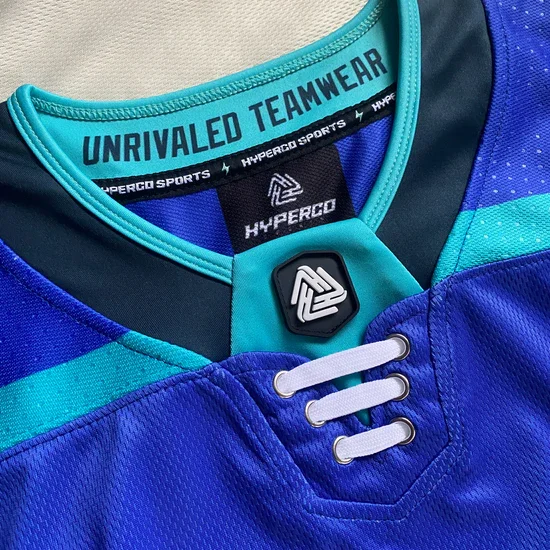
The players of the WNBA seemed to agree, and for them the vision portrayed in 9 to 5 was hardly a utopian fantasy. Led by star players Napheesa Collier and Breanna Stewart, the players formed Unrivaled, an alternative three-on-three league whose season ran between the end and beginning on the WNBA season. The economics and organization of the league provided a corrective to everything players complained about with the WNBA and realized a world much like 9 to 5 imagines. League facilities included childcare, chefs and nutritionists for the players, trainers, and more. The minimum salary of over $200,000 was nearly triple that of the WNBA, and the players enjoyed revenue-sharing on top of that.
Since the workers/players share in the profits—a version of ownership--they of course have incentive for it to succeed economically. As they play, they have an incentive for it succeed in human terms.
Apparently, the venture has worked and worked quite well. Take Angel Reese’s tweet from last January:
“We get to work out, use the weight room, create new bonds/friendships, get treatment, get massages, use the sauna, getting 2 meals a day, and then a facial before I leave for the day??? Yeah i love it here.”
The players seem to have created the world they want: one where the workers own and control their world, sharing in the fruits of their labor and organizing the workplace in ways that support their bodies and spirits, rather than grinding them down, affording them honor and dignity.
It almost sounds like a socialist utopia. But, of course, socialism is evil, we are taught in our capitalist society. Let’s never forget that.
As these same players now find themselves in laborious and frustrating collective bargaining with the WNBA, we have to wonder if the players even really need the WNBA.
Why keep engaging in and thus sustaining the contentious relationship between owners and players, between labor and capital, when the players have already shown they make this divisive form of economic organization disappear by becoming owners and players, by making capital and labor one and the same by owning the league, or at least sharing the fruits of their labor?
Let’s look at what’s been going on in the collective bargaining drama between WNBA league owners and the players to give some context here.
Last December, 98% of WNBA players authorized their union to call a strike if necessary. The current contract, previously scheduled to expire last October 31, was extended until January 9.
Negotiations have been stalled for months with the primary impasse being the issue of revenue-sharing. Players are demanding a revenue-sharing model that would allow their salaries to grow in step with the economic growth of the very league they make possible.
The NBA players enjoy such a structure, receiving 49%-51% of the NBA’s basketball-related income, while WNBA players currently receive 9.3% of the income the league generates.
So, the players’ demand is far from outlandish. Arguably, far more outlandish, even outrageous, is the meager percentage of the WNBA’s revenues currently allotted for players’ salaries.
NBA Commissioner Adam Silver has pushed back on the demand for revenue-sharing, objecting to concept of “share.” He said in an October 21 interview, “I think you should look at it in absolute numbers in terms of what they’re making, and they’re going to get in this cycle of collective bargaining, and they deserve it.”
So much for what we all learned in kindergarten about the importance of sharing.
What Silver is holding fast to is the typical divide between capital and labor. He, and the league he represents, is resisting a transformation in the very structures of ownership and labor relations. To give the players what they want would signal the erosion of the division between capital and labor and sow the seeds for a more powerful vision and indeed realization of collective ownership, of worker ownership.
The funny thing is, what the players are bargaining for, they have already realized in Unrivaled.
Do they even need the WNBA? In many ways, they have all the leverage. Since they formed the three-on-three league that plays in the WNBA off-season, why not create a five-on-five league that plays when the WNBA season typically runs.
Who needs these owners? It’s hard to believe players coming out of college and players from international leagues would not be attracted to this league.
The WNBA truly is no rival for Unrivaled, an aptly-named league.
Of course, to be wholly transformative, Unrivaled would need go as far as creating a revenue-sharing structure for all employees in the league, from referees to janitors to any worker making the league operational.
Women’s professional basketball players have always been a sort of political vanguard fighting for civil and human rights (see here and here). Unrivaled shows us they can go even further in transforming our workplaces, economy, and culture in more humane directions.