
Who Deserves Rape? State-Sanctioned Sexual Violence and Second-Class Citizenship for LGBTQ Americans Undermine Basic Humanity and Equality
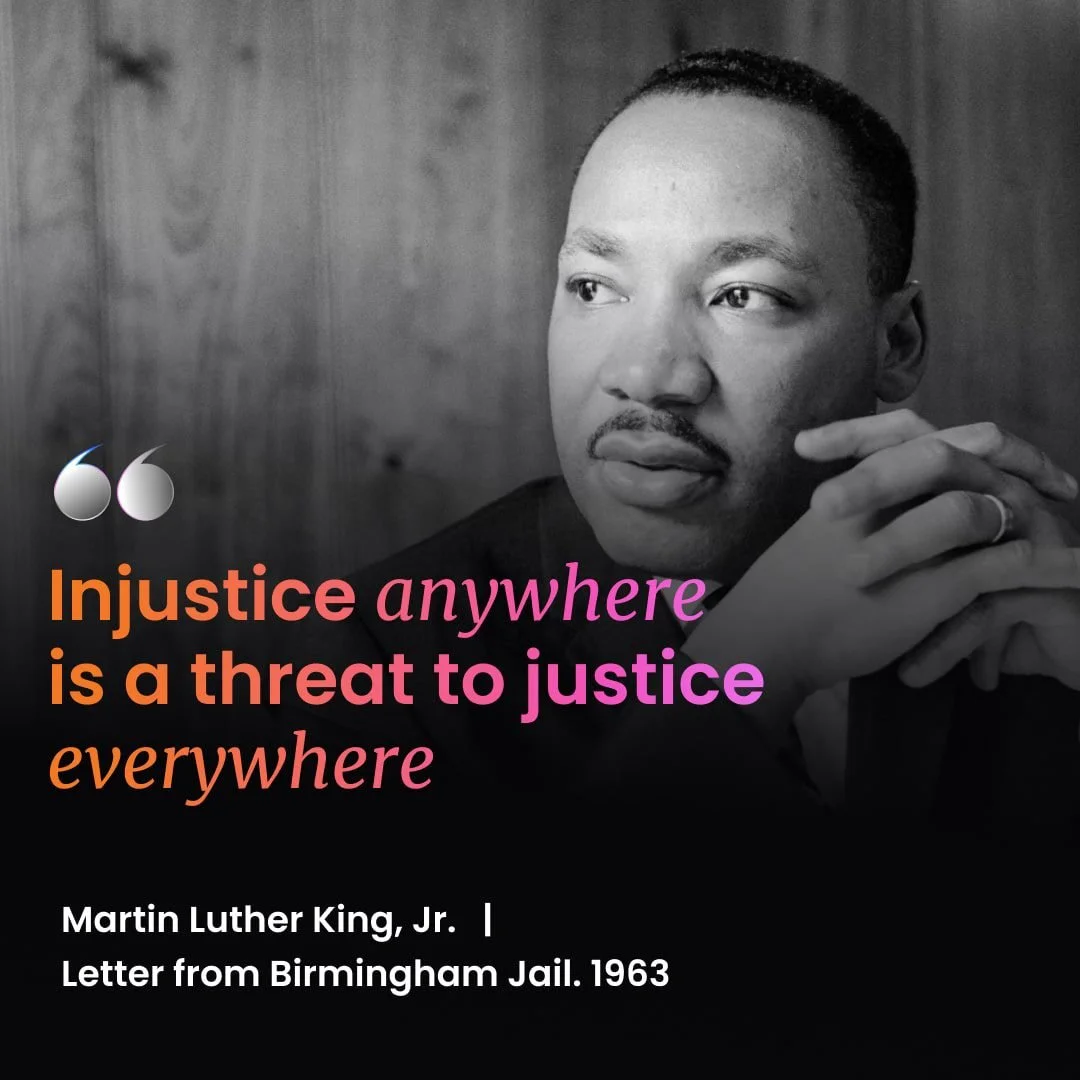
Martin Luther King, Jr. famously said, "Injustice anywhere is a threat to justice everywhere.” His point, if it needs explaining, was simple yet profound. If we allow some to suffer injustice, we aren’t just sanctioning injustice against particular people, we are sanctioning injustice itself, meaning it could spread anywhere, to anyone. You may be next, and justice for some does not make a just society.
King’s assertion underscores the importance of protecting the fundamental rights of others if we want to secure our own. Sustaining a society rooted in a recognition of people’s equality, of their equal rights and equal protection under law, necessarily and logically requires we each protect the rights of others, of all. If I have rights that others don’t, then, well, we don’t really have equality, do we? Equality does not inhere in individuals; it’s relational.
Thus, King’s assertion is also a call to empathy, to recognize and respond to the injustice and suffering others experience, as a necessary feature of democratic society. King stands in stark contrast to the likes of authoritarian-minded Elon Musk, who has stated, counter to King, that “the fundamental weakness of Western civilization is empathy.”
It’s only a weakness if one despises democracy and humanity itself.
Let’s try this exercise in empathy to demonstrate the point:
Imagine you live in a nation that celebrates itself as a democracy purportedly animated by the beautiful idea that all people are created equal and protected equally under the law, and the government that supposedly represents you and is supposed to operate according to that principle of equality basically says you are fair game to be raped because of who you are and how you identify yourself. You will not be protected, and those who commit this violence against you will face no consequences.
How does that feel? Does it feel like a just state of affairs for you?
Well, incarcerated LGBTQ Americans find themselves in exactly this situation, according to recent reporting from NPR, which obtained an internal Department of Justice memo which “instructed inspectors to stop evaluating prisons and jails using standards designed to protect transgender, intersex, and gender-nonconforming people from sexual violence.”
The impetus behind the memo was to align federal standards related to the 2003 Prison Rape Elimination Act (PREA) with Donald Trump’s executive order around what he and his administration have termed “gender ideology extremism.” The order decrees—counter to nature, science, humanity, and reality itself—that there are two genders: male and female.
So, if your gender identity does not align with these narrowly socially-invented categories, transcended by nature and reality, your personhood is simply not even recognized by this administration, and you can expect no protection.
So, the memo basically says it’s okay for some Americans to be raped.
It would be fitting here Joseph Welch’s indicting question to Senator Joseph McCarthy: “Have you no sense of decency, sir? At long last, have you no sense of decency?”
While a fitting question, we are way past it with Trump and his administration; and maybe with Americans themselves. After all, this nation elected a convicted rapist.
Nonetheless, it is always necessary to raise the question and hold up a mirror to the national visage so we behold who we are, what we’ve been, and what we’ve become and are becoming.
Americans need to own what they are sanctioning and have historically sanctioned and not have the luxury of denying the reality of the moral monstrousness of our national behavior.
Put most simply, in a nation that has long sought to distinguish itself by its aspirational values of equality and liberty, we find ourselves as a nation engaging in a behavior of determining which Americans deserve to face discrimination and violence.
Against which Americans can we discriminate in this nation? Upon which Americans can we inflict violence with impunity? Who can get raped without consequence for the rapist?
Now, I don’t mean to sound naïve. Certainly, Americans have a notoriously shameful history of discriminating and committing violence, sexual and otherwise, against people of color, women, the LGBTQ population, Jewish people, and more—in ways both de jure and de facto.
Too often, though, Americans like to deny these realities, both historical and contemporary, or insist they are an unfortunate part of our past.
But hardly. And it’s important to recognize that it’s the American state leading the way. In some sense, that is what is scariest—when the state, with all the power, force, and resources it has at its disposal, affirms and foments irrational prejudice and itself acts based on prejudice to inflict and enforce violence against Americans.
We have, of course, the DOJ memo cited above which occasioned this article. But as another stark example, take the case of Bostock v. Clayton County which the U.S. Supreme Court decided in June 2020.
Gerald Bostock was an employee of Clayton County, within the Atlanta Metropolitan area, who charged he was fired because of his sexual orientation (he had promoted a gay softball league in his workplace). Lower courts denied that his sexual orientation endowed him a protected status under Title XII of the Civil Rights Act of 1964, which forbid discrimination in employment “on the basis of sex.” The court’s position was that the word “sex” in this clause referred to biological sex, not sexual orientation.
Notice, of course, the fine lines we can draw in our nation when we are looking for reasons to discriminate and sanction violence against others, as opposed to making a strenuous effort to extend, freedom, rights, and equality to all.
When the Supreme Court adjudicated the case, it decided in a 6-3 decision in favor of Bostock. Justice Neil Gorsuch, appointed by Trump and typically labeled a conservative, penned the majority decision. The reasoning in the decision is of paramount importance and went thusly:
An employer who fires an individual for being homosexual or transgender fires that person for traits or actions it would not have questioned in members of a different sex. Sex plays a necessary and undisguisable role in the decision, exactly what Title VII forbids. Those who adopted the Civil Rights Act might not have anticipated their work would lead to this particular result. But the limits of the drafters' imagination supply no reason to ignore the law's demands. Only the written word is the law, and all persons are entitled to its benefit.
What is important to notice in the reasoning here is that the original meaning of “on the basis of sex” is largely upheld. Gorsuch isn’t so much arguing that the word “sex” references sexual orientation but rather that Bostock, as a biological man, wasn’t being afforded the same rights and consideration as biological woman would be—in this case, the right to have romantic relations with a biological man. He somewhat skirts the idea of sexual orientation itself; and, with the other five consenting justices, manages to reason and critically think through the irrationality heterosexist prejudice.
On the other hand, Justice Alito was not up to thinking through his prejudice and homophobia, writing a lengthy and frothing dissent, citing, seemingly, every dictionary definition and usage of the word “sex” he could unearth in order to insist that “on the basis of sex” did not and could not in 1964 have in any way referenced sexual orientation.
But let’s remember: Gorsuch, in the reasoning of the majority decision, didn’t really say it did. What the decision said was basic enough: that Bostock was being denied the same right a woman would have to be romantically involved with a man and thus was not being granted equal protection. He was being discriminated against because he was a biological man.
It was as if Alito, so blinded by prejudice, could not even assimilate the reasoning of the majority decision. Of course, he denies any prejudice and abdicates all responsibility by saying it’s not Supreme Court’s place to decide if LGBTQ Americans deserve protection from discrimination. That, he said, was a matter for Congress.
The point of reviewing the reasoning of the majority in the Bostock case and the hateful prejudice behind Alito’s fairly rabid dissent is to highlight the role of state in deciding which forms of discrimination—and hence which kinds of violence—are acceptable in America.
While discrimination, prejudice, hate, and violence are and have been robustly present in the attitudes and behaviors of the American people, the state has played and can play a substantial role in curbing and discouraging or unleashing and fomenting that hate.
Author and Civil Rights Activist James Baldwin in his 1985 essay “The Price of the Ticket,” introducing his collection of essays with the same title, analyzed the role of the state precisely in advancing the practices of inhumanity. He wrote, “A mob is not autonomous: it executes the real will of the people who rule the state.” He elaborates:
A mob cannot afford to doubt: that the Jews killed Christ or that [n-words] want to rape their sisters or that anyone who fails to make it in the land of the free and the home of the brave deserves to be wretched. But these ideas do not come from the mob. They come from the state, which creates and manipulates the mob. The idea of a black person as property, for example, does not come from the mob. It is not a spontaneous idea. It does not come from the people, who knew better, who thought nothing of intermarriage until they were penalized for it: this idea comes from the architects of the American state. These architects decided that the concept of Property was more important—more real—than the possibilities of the human being.
The mob, as Baldwin characterizes it, is not inclined to think critically but rather to accept the state’s designation of what kind of treatment particular folks deserve. America under Trump’s rule seems to prove Baldwin’s point. Hate crimes have surged during Trump’s administrations (see here, here, and here.) And let’s not forget the domestic terrorist who killed twenty-two people in El Paso, Texas in 2019, echoing Trump’s anti-immigrant rhetoric in his manifesto. Or Robert Bowers’ killing of eleven people at the Tree of Life Synagogue in Pittsburgh in 2018. His social media echoed Trump’s rhetoric of “white genocide” and the rhetoric of white Christian nationalists who rally behind Trump.
It's up to the American people to shake themselves loose from a mob-like mentality and think critically and empathetically. It’s up to us to fight for and install a government by, for, of the people.
It’s up to us to not tolerate injustice anywhere, if only out of our own self-interest, though hopefully out of a larger spirit of the most basic humanity.
I guess a lot depends on how we answer this question:
Is it okay for anybody to endure rape?